Message Board

What's your say ??? Send Message Here.
--------------------------------------------------------------
Showing posts with label virtualization. Show all posts

Friday, July 30, 2010

Windows 7 XP Mode Limits Media Player Functionality

Bookmark and Share

Windows 7 XP Mode Limits Windows Media Player Functionality

Article Source: news.softpedia.com. By Marius Oiaga, Technology News Editor, @MariusOiaga
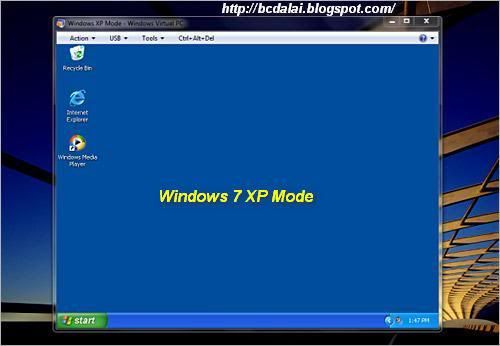
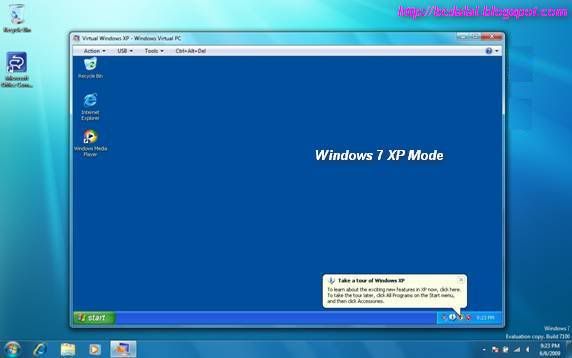
 Windows 7 XP Mode

When it revealed that it was going to deliver a free and activated copy of Windows XP Service Pack 3 (SP3) for select editions of Windows 7, Microsoft also indicated that the virtualized version of the operating system releases in 2001 comes with a few shortcomings. Windows XP Mode in Windows 7 cannot be used in gaming scenarios, for example. This week, the Redmond company described further limitations for the free but virtualized copy of XP delivered to customers running the Professional, Enterprise and Ultimate SKUs.


It appears that Windows Media Player functionality is limited in Windows 7 XP Mode. In fact, according to the software giant, users will not be able to leverage the Windows Media Player inside Windows 7 XP Mode in the same manner as they do on Windows 7.
“When you maximize or minimize the Windows Media Player window while playing contents on Windows 7 running Windows XP Mode, you may receive an "unexpected network error occurred" error message, which causes Windows Media Player to stop playing,” Microsoft stated.

Microsoft explained that there is no bug behind this problem, and that quite to the contrary, this was the normal, intended behavior from the get go. “This behavior is by design,” the company explained. Of course, in the context in which Windows 7 XP Mode was designed with the limitations noted above, customers that have stumbled across this issue should not expect Microsoft to fix it.

And while there won’t be an update or a hotfix enabling the full functionality of Windows Media Player inside Windows 7 XP Mode, customers won’t even be able to deploy a manual fix. “There is no workaround for it,” the software giant underlined. In this context, customers taking advantage of Windows 7 XP Mode should avoid running Windows Media Player, and the frustration that will come with not being able to take advantage of basic functionality such as minimize and maximize.


References:
Update for Windows 7 (KB977206)
Update for Windows 7 for x64-based Systems (KB977206)
Windows XP Mode RTM and Windows Virtual PC RTM are available for download here.
Collection: bcdalai

What's your say ??? Send Reply


Thursday, February 4, 2010

Windows 7 Resources for IT Professionals

Bookmark and Share

Windows 7 Resources for IT Professionals

Windows 7 Upgrade Advisor

Brief Description
Download and run the Windows 7 Upgrade Advisor to see if your PC is ready for Windows 7. It scans your hardware, devices, and installed programs for known compatibility issues, gives you guidance on how to resolve potential issues found, and recommends what to do before you upgrade.
Overview
Before you begin: Be sure to plug in and turn on any USB devices or other devices, such as printers,
external hard disks, and scanners, that you regularly use with the PC you're checking.
The Windows 7 Upgrade Advisor scans your PC for potential compatibility issues and lets you know about
your Windows 7 upgrade options. Within minutes, you'll get a report that tells you if your PC meets the
system requirements, if any known compatibility issues with your hardware, devices, and installed programs are found, and gives guidance on what to do to before installing Windows 7 on your PC.
Download:
-------------------------------------------------------------------------------

Windows Easy Transfer for transferring from Windows XP (32 bit) to Windows 7
Brief Description
Use Windows Easy Transfer to copy your files, photos, music, e-mail, settings, and more from a computer running Windows XP to a computer running Windows 7. You can transfer data using an Easy Transfer Cable, removable media, or across a network.
Overview
This software installs Windows Easy Transfer on a computer running the 32-bit version of Windows XP
so you can copy your files, photos, music, e-mail, settings, and more to a computer running Windows
7. If your computer is running another version of Windows, you can download other versions of Windows Easy Transfer by following this link. This software is already built into Windows 7, so it is not necessary to install it on a computer running Windows 7.
Download:
-------------------------------------------------------------------------------
BitLocker To Go Reader
Brief Description
The BitLocker To Go Reader is an application that provides users read-only access to BitLocker-protected FAT-formatted drives on computers running Windows XP or Windows Vista.
Overview
BitLocker protection on removable drives is known as BitLocker To Go. When a BitLocker-protected removable drive is unlocked on a computer running Windows 7, the drive is automatically recognized and the user is either prompted for credentials to unlock the drive or the drive is unlocked automatically if configured to do so. Computers running Windows XP or Windows Vista do not automatically recognize that the removable drive is BitLocker-protected. With the BitLocker To Go Reader users can unlock the BitLocker-protected drives by using a password or a recovery password (also known as a recovery key) and gain read-only access to their data.
System Requirements
Supported Operating Systems: Windows Vista; Windows Vista 64-bit Editions Service Pack 1; Windows Vista Business; Windows Vista Business 64-bit edition; Windows Vista Enterprise; Windows Vista Enterprise 64-bit edition; Windows Vista Home Basic; Windows Vista Home Basic 64-bit edition; Windows Vista Home Premium; Windows Vista Home Premium 64-bit edition; Windows Vista Service Pack 1; Windows Vista Service Pack 2; Windows Vista Starter; Windows Vista Ultimate; Windows Vista Ultimate 64-bit edition; Windows XP 64-bit; Windows XP Service Pack 2; Windows XP Service Pack 3.
Download:
-------------------------------------------------------------------------------
Microsoft Hardware-Assisted Virtualization Detection Tool
Brief Description
The Hardware-assisted virtualization (HAV) detection tool checks if the computer processor supports HAV and if this setting is enabled.
Overview
Windows Virtual PC requires processors capable of hardwareassisted virtualization with AMD-V™, Intel® VT or VIA® VT turned on in the BIOS. The HAV detection tool helps you check if the computer processor supports hardware virtualization. The tool also checks if this feature is enabled on the processor. For more information about Windows Virtual PC, please visit the Windows Virtual PC website.

To know whether your computer is compatible to run Windows XP Mode/Hyper-v/Windows Virtual PC or not use the following tool:
Download:
-------------------------------------------------------------------------------
Remote Server Administration Tools for Windows 7
Brief Description
Remote Server Administration Tools for Windows® 7 enables IT administrators to manage roles and features that are installed on computers that are running Windows Server® 2008 R2, Windows Server® 2008, or Windows Server® 2003, from a remote computer that is running Windows 7.
Overview
**Remote Server Administration Tools for Windows 7 can be installed ONLY on computers that are running the Enterprise, Professional, or Ultimate editions of Windows 7.**
Remote Server Administration Tools for Windows 7 enables IT administrators to manage roles and features that are installed on remote computers that are running Windows Server 2008 R2 (and, for some roles and features, Windows Server 2008 or Windows Server 2003) from a remote computer that is running Windows 7. It includes support for remote management of computers that are running either the Server Core or full installation options of Windows Server 2008 R2, and for some roles and features, Windows Server 2008. Some roles and features on Windows Server 2003 can be managed remotely by using Remote Server Administration Tools for Windows 7, although the Server Core installation option is not available with the Windows Server 2003 operating system. This feature is comparable in functionality to the Windows Server 2003 Administrative Tools Pack and Remote Server Administration Tools for Windows Vista with Service Pack 1 (SP1).
Download:
------------------------------------------------------------------------------

Microsoft Network Monitor 3.3
Brief Description
Tool to allow capturing and protocol analysis of network traffic.
Overview
Network Monitor 3.3 is a protocol analyzer. It allows you to capture network traffic, view and analyze it. Version 3.3 is an update and replaces Network Monitor 3.2. Network Monitor 3.x is a complete overhaul of the previous Network Monitor 2.x version.
System Requirements
Supported Operating Systems: Windows 7; Windows Server 2003 Service Pack 2; Windows Server 2003 Service Pack 2 x64 Edition; Windows Server 2008; Windows Server 2008 R2; Windows Server 2008 R2 for Itanium-based Systems; Windows Vista 64-bit Editions Service Pack 1; Windows Vista Service Pack 1; Windows XP 64-bit; Windows XP Service Pack 3
Download:
------------------------------------------------------------------------------

Update for Windows XP SP3 to enable RemoteApp
Brief Description
This package lets you to run many Windows XP productivity applications from a Windows 7-based PC using Windows Virtual PC
Overview
This package lets you to run many Windows XP productivity applications from a Windows 7-based PC using Windows Virtual PC. This patch needs to be installed in your Windows XP SP3 virtual machine.
For more information about Windows Virtual PC, please visit the Windows Virtual PC website.
Download:
------------------------------------------------------------------------------
Update for Windows Vista SP1 or above to enable RemoteApp
Brief Description
This package lets you to run many Windows Vista productivity applications from Windows 7-based PC using Windows Virtual PC.
Overview
This package lets you to run many Windows Vista productivity applications from Windows 7-based PC using Windows Virtual PC. This package needs to be installed in your Windows Vista virtual machine.
For more information about Windows Virtual PC, please visit the Windows Virtual PC website.
Download:
------------------------------------------------------------------------------
HYPER-V and RED HAT (Linux) support
Here are the details:
Red Hat Enterprise Linux 5.2, 5.3, 5.4 have passed cert tests when running on Windows Server 2008 Hyper-V, Microsoft Hyper-V Server 2008, Windows Server 2008 R2 Hyper-V, Microsoft Hyper-V Server 2008 R2. See more at RedHat's certified hardware site.

Windows Server 2003/ Windows Server 2008 / Windows Server 2008 R2 are validated to run on Red Hat Enterprise Linux 5.4, using their KVM-based hypervisor. See more at Microsoft Server Virtualization Validation Program site.

System Center Operations Manager 2007 R2 supports monitoring of the following operating systems:
HP-UX 11i v2 and v3 (PA-RISC and IA64)
Sun Solaris 8 and 9 (SPARC) and Solaris 10 (SPARC and x86)
Red Hat Enterprise Linux 4 (x86/x64) and 5 (x86/x64) Server
Novell SUSE Linux Enterprise Server 9 (x86) and 10 SP1 (x86/x64)
IBM AIX v5.3 and v6.1 (POWER)

Read:
------------------------------------------------------------------------------
Microsoft Press and TechNet Magazine have teamed up to create a free e-book:
Deploying Windows 7, Essential Guidance from the Windows 7 Resource Kit and TechNet Magazine. The e-book includes ten complete chapters from Microsoft Press’s Windows 7 Resource Kit (ISBN: 9780735627000; ISBN: 1760 pages), by Mitch
Tulloch, Tony Northrup, Jerry Honeycutt, Ed. Wilson, and the Windows 7 Team at Microsoft.
Download:
-------------------------------------------------------------------------------

Building a Standard Image of Windows 7 Step-by-Step Guide
Brief Description
Explains how to install a custom image by using an operating system image that includes your
customizations and applications.
Download:
-------------------------------------------------------------------------------
Configuring Windows 7 for a Limited User Account
Brief Description
Explains how to set up your Administrator accounts through User Account Control.
Download:
-------------------------------------------------------------------------------
Download your free e-book of Introducing Windows Server 2008 R2
Introducing Windows Server 2008 R2 e-book.
Download:
-------------------------------------------------------------------------------
77 Windows 7 Tips
Read:
-------------------------------------------------------------------------------

What’s New in Group Policy for Windows 7 and Windows Server
2008 R2
Read:
-------------------------------------------------------------------------------
UAC tweaks in Windows 7
Read:
Article from: Windows 7 blog:
-------------------------------------------------------------------------------
Your Windows 7 Deployment Guide
Read:
-------------------------------------------------------------------------------
Windows 7 Remote Desktop Connection 7.0 for XP SP3 and Vista SP1 and SP2
“The Remote Desktop Connection 7.0 client update enables you to use the new Remote Desktop Services features. These features are introduced in Windows 7 and in Windows Server 2008 R2 and are available for computers that are running Windows Vista Service Pack 1 or Windows Vista Service Pack 2. After you install this item, you may have to restart your computer”.
Download:
-------------------------------------------------------------------------------
Fully install Windows 7 from the upgrade disc
Read the full article here:
The pros and cons of switching to Windows 7:
Read:
Making the business case for Windows 7
Create a Windows XP and 7 dual-boot systemstaged for an easy migration
What Windows 7 means to Windows server administrators:
Windows Server 2008 R2 Foundation gives small networks more options
Windows 7 Professional feature-to-feature comparison chart
Delayed Start feature increases options for Windows services
Determine processes running on a remote server with PsList
-------------------------------------------------------------------------------

Engineering Windows 7
Read everything on Windows 7 on E7 blog
Visit:
-------------------------------------------------------------------------------
Windows 7 Upgrade Paths
Read:
-------------------------------------------------------------------------------
Cloud Infrastructure
Read this article for more about Cloud Computing infrastructures:

Challenges of Virtual Infrastructure Deployment and Management
Read this article:

10+ ways Windows 7 will affect IT pros
Read:

Installing Windows 7 on an existing Windows XP Computer
To install Windows 7 and migrate existing user files and settings. Read the complete article:
------------------------------------------------------------------------------
Yet another awesome tool from the Sysinternals team, Disk2vhd. As the name implies this tool can covert a physical disk into a virtual disk. Here is the quick summary of it’s capabilities. The converted VHD file can be used to boot from Virtual PC, Hyper-V and another physical machine as well Works on a machine that’s online VHD can be created on the same volume that is getting converted Preserves the partition information of the disk
Cool utility to create your physical dosk drive to a VHD file.
Download this tool from:
------------------------------------------------------------------------------
Windows Vista: Windows update went bad, now my PC is stuck in endless updating cycle
This is the place for all problem reports / Troubleshooting methods and more informations on Tech. Support. Read a recent post relating to a Windows Update issue on Windows Vista, from forum of CNET.com:
Read this and try to sort out the solutions here......
------------------------------------------------------------------------------
Fix Windows 7 Activation Status Not Available or SLMgr 0×80070422 Error
Windows 7 displays the system activation status in System Properties, which can be accessed via Control Panel -> System and Security -> System. However, sometimes, Windows activation may display error message which saying activation status not available, together with product ID which is also not available.

Read this page for detail:
And also read:
Related articles:


-----------------------------------

Posted by: bcdalai

Wednesday, April 8, 2009

Windows 7 for IT Pro

Bookmark and Share

Windows 7 for IT Professional


Click this to enlarge
Microsoft Windows 7 logo
(Note: This article relating to Microsoft Windows 7. The information in this article is subject to change. The features quoted here may be partly same for Windows Server 2008 R2.)
With the release of Windows 7 now available, I encourage you to download a trial version to your lab machine and begin testing your applications and devices to get to know what’s in it for you. As you begin testing, I offer this article to the key features and capabilities in this new desktop operating system. Here are the top 10 things for IT professionals to know about Windows 7:
1 - Application compatibility
The Windows Vista operating system introduced architectural changes down to the kernel level that made the OS inherently more secure than Windows XP. However, this came at a cost; many applications needed modification to function properly in a Windows Vista environment. While at this point in the lifecycle of Windows Vista (post Service Pack 1) most applications are now compatible, deploying Windows Vista into the desktop environment early on required some “heavy lifting” and creative shimming—not to mention a few late nights.
Windows 7 is built on the same basic architecture as Windows Vista, so most applications will retain their compatibility between these operating systems. This alone will make adopting Windows 7 much less challenging than migrating from Windows XP to Windows Vista. If your organization is like many that are still standardized on Windows XP, you will need to transition to updated versions of your key applications, but the availability of Windows Vista–compatible versions and well-proven shims will make this task more manageable.
2 - Hardware compatibility and requirements
Much like the application compatibility issues, adopting Windows Vista early-on was a challenge because of the higher system requirements—such as RAM and graphics.  On the flip side, Windows Vista provides manageability and security that just isn’t available on Windows XP, and with more capable hardware, Windows Vista is able to perform a number of useful functions that improve productivity (such as Windows Search 4 and the Windows Aero desktop experience) and increase PC responsiveness (the ReadyBoost technology launches applications more quickly by maintaining a portion of frequently used applications in memory).
Windows 7 was designed to perform well on the same hardware that runs Windows Vista well, while delivering additional performance and reliability improvements. The design team for Windows 7 had a specific focus on the fundamentals—as well as maintaining compatibility with existing applications and hardware. In operation, you will find that Windows 7 boots faster and has a smaller memory footprint than Windows Vista.
3 - Better Together with Windows Server 2008
One of the key benefits of the modern operating system is that Windows 7 and the Windows Server 2008 operating system share a common code base, and are maintained with a single servicing model. This servicing model means updates and security updates are shared across both client PCs and servers, simplifying the process of maintaining an up-to-date infrastructure.
In addition, environments with both Windows Server 2008 and Windows 7 unlock capabilities that extend functionality and help ensure a more secure environment. One example is DirectAccess, which allows management and updating of remote mobile PCs that are connected to the Internet, even when they are not connected to the corporate network. This capability helps ensure that remote users receive security patches on a timely basis, and allows IT to update configuration setting via Group Policy. For the end user, DirectAccess allows access to locations on the corporate network without using a virtual private network (VPN) connection. (In addition to Windows Server 2008 R2, DirectAccess requires IPSec and IPv6 implementation.)
4 - Extend data encryption to removable media
News reports are rife with stories about companies losing control over sensitive information. In some industries, this is an issue with grave legal implications, while in other situations the issue is inconvenience. Regardless, smart compliance policy dictates that sensitive information be safeguarded in the event of a lost or stolen laptop. Further, preventing sensitive information from being removed from corporate resources is a pillar of effective compliance management.
Windows 7 includes BitLocker technology, first implemented in Windows Vista, which now provides full encryption of all boot volumes on a PC; along with introducing BitLocker To Go that offers data protection on portable storage, such as USB flash drives. In addition, BitLocker Drive Encryption and BitLocker To Go can be managed via Group Policy, placing more control over sensitive information in the hands of the professionals.
5 - Control the application portfolio available to end users
Windows 7 features AppLocker, a new capability that allows IT administrators to specify which applications are permitted to run on a laptop or desktop PC. This capability helps you manage license compliance and control access to sensitive programs, but also importantly, it helps reduce the opportunity for malware to run on client PCs. AppLocker provides a powerful rule-based structure for specifying which applications can run, and includes “publisher rules” that keeps the rules intact though version updates.
To see how AppLocker is set up and managed, click here for a screencast demonstration.
6 - Automate routine tasks with powerful scripting
To help IT administrators better maintain a consistent environment and improve personal productivity, Windows 7 includes an updated graphical scripting editor, Windows PowerShell 2.0—a powerful, complete scripting language that supports branching, looping, functions, debugging, exception handling, and internationalization.

  • PowerShell 2.0 has an intuitive, graphical user interface that helps make script generation easier, especially for administrators who are not comfortable in command-line environments.

  • PowerShell 2.0 supports two types of remoting—fan-out, which delivers management scripts on a one-to-many basis, and one-to-one interactive remoting to support troubleshooting of a specific machine. You can also use the PowerShell Restricted Shell to limit commands and command parameters to system administrators, and to restrict scripts to those who have been granted rights.

  • PowerShell 2.0, with the Group Policy Management Console (available as a separate download), allows IT professionals to use scripting to manage Group Policy Objects and to create or edit registry-based group policy settings in Windows 7. Similarly, you can use PowerShell to configure PCs more efficiently, using richer logon, logoff, startup, and shutdown scripts that are executed through Group Policy.
Click here to take a quick tour of PowerShell 2.0.
7 - Troubleshoot faster and more effectively
Windows 7 provides rich tools to identify and resolve technical issues, often by the end users themselves. If a help desk call is unavoidable, Windows 7 includes several features and troubleshooting tools to help speed resolution.

  • The Problem Steps Recorder allows end users to reproduce and record their experience with an application failure, with each step recorded as a screen shot along with accompanying logs and software configuration data. A compressed file is then created that can be forwarded to support staff to help troubleshoot the problem.

  • Windows 7 includes a suite of troubleshooting packs, collections of PowerShell scripts, and related information that can be executed remotely by IT professionals from the command line, and controlled on the enterprise basis through Group Policy Settings.

  • Windows 7 also includes Unified Tracing to help identify and resolve network connectivity issues in a single tool. Unified Tracing collects event logs and captures packets across all layers of the networking stack, providing an integrated view into what’s happening in the Windows 7 networking stack and aiding analysis and problem resolution.
8 - Create, deploy, and manage images more efficiently
Windows 7 includes several tools to streamline the creation and servicing of the deployment image, and to get users up and running as quickly as possible.
The Deployment Image Servicing and Management (DISM) tool in Windows 7 provides a central place to build and service Windows images offline. With DISM, you can perform many functions with one tool: mount and unmount system images; add, remove, and enumerate packages and drivers; enable or disable Windows features; configure international settings, and maintain an inventory of offline images that contain drivers, packages features, and software updates. Windows 7 also enables the same processes and tools to be used when managing virtual machine (VHD) and native file-based (WIM) image files.
Windows 7 also includes Dynamic Driver Provisioning, where device drivers are stored independent of the deployed image and can be injected dynamically based on the Plug and Play ID of the hardware, or as predetermined sets based on information contained in the basic input/output system (BIOS). Reducing the number of drivers on individual machines reduces the number of potential conflicts, ultimately minimizing setup time and improving the reliability of the PC.
When you are ready to deploy Windows 7, Multicast Multiple Stream Transfer enables servers to “broadcast” image data to multiple clients simultaneously, and to group clients with similar bandwidth capabilities into network streams to permit the fastest possible overall transfer rate while optimizing bandwidth utilization.
Watch a screen cast demonstration of the deployment tools for Windows 7 here.
9 - Easier migration of user data and profiles
Windows 7 includes enhancements to the User State Migration Tool (USMT), a command-line tool that you use to migrate operating system settings, files, and other user profile data from one PC to another. In Windows 7, USMT adds a hardlink migration feature for computer refresh scenarios, a capability that stores user data and settings in a common place on a drive, eliminating the need to “physically” move the files during a clean install.
10 - Improve user productivity in branch offices
Windows 7 introduces BranchCache, a technology that caches frequently accessed content from remote file and Web servers in the branch location, so users can access this information more quickly. The cache can be hosted centrally on a server in the branch location, or can be distributed across user PCs. One caveat: to take advantage of BranchCache, you will need to deploy Windows Server 2008 R2 on the related servers.
And, also this technology:
Better support for client virtualization
Windows 7 delivers a richer experience when users are connected to a virtual desktop—much closer to the experience provides by a native Windows desktop. For example, Windows 7 provides multi-monitor support, bi-directional audio to enable Voice over Internet Protocol (VoIP) and speech recognition applications, and access to local devices, such as printers.
So there you have it—the top 10 things you need to know about Windows 7 (okay, we couldn’t stop until we hit “11”), and our contribution to the annual onslaught of New Year’s lists. We hope you enjoyed learning a bit more about the newest desktop operating system from Microsoft, or at least found it more useful than hearing about Lindsay Lohan’s latest misadventure!

-----------------------------------------------------------------
Article by bcdalai Source: Microsoft TechNet
-----------------------------------------------------------------